Article: Chinese Prayer Mala Beads: Exploring Their History, Cultural Significance, and Modern Use
Chinese Prayer Mala Beads: Exploring Their History, Cultural Significance, and Modern Use
Unveiling the Timeless Charm of Chinese Prayer Beads
Imagine holding in your hand a string of Chinese prayer beads, their smooth texture worn by time and devotion. These are no ordinary accessories; they are artifacts of spirituality, history, and style. From their origins in ancient temples to their place in modern fashion, mala beads have evolved into a quiet yet powerful statement of balance and intention.


The Rich History of Chinese Prayer Beads
Origins in Ancient Chinese Culture
Long before they became a style statement, Chinese prayer beads were revered as spiritual tools. Introduced during the Han dynasty, their purpose was simple yet profound: to aid in meditation and mantra recitation. Each bead was a tactile reminder of focus, a rhythm that anchored practitioners in their spiritual journey.
By the Tang dynasty, these beads had transcended their religious roots, finding a place in the hands of scholars and aristocrats. They represented not only faith but also a deep appreciation for craftsmanship and beauty.
Did you know? In Buddhist tradition, the 108 beads in a mala symbolize the earthly desires that one must overcome to achieve enlightenment.
The Evolution of Design and Craftsmanship
From humble beginnings with simple wooden beads, Chinese mala beads evolved into intricate creations featuring jade, amber, and Buddha stones. Artisans infused each piece with symbolism—dragons for strength, lotuses for purity—turning every bead into a story. Today, these beads remain a testament to both ancient traditions and modern design sensibilities.

Left: Ancient court beads from the Palace Museum; Right: Modern mala bead design by Ona Beam.
The Imperial Elegance of Chaozhu: Qing Dynasty Court Beads
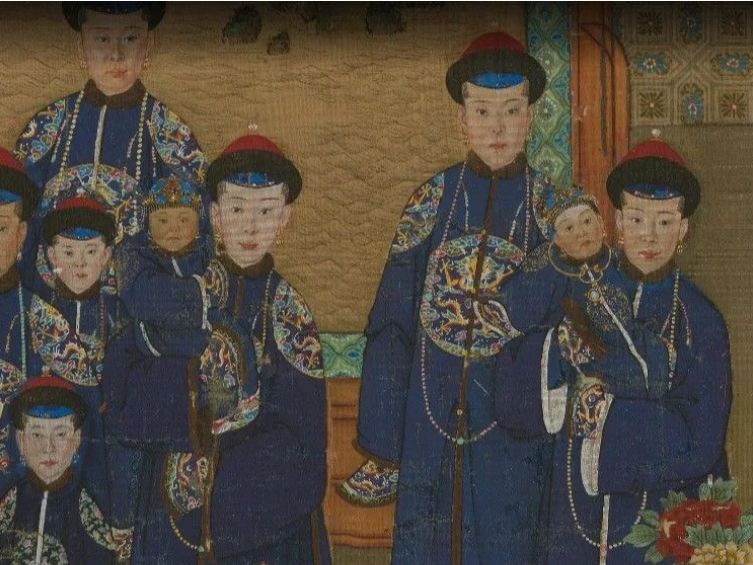
Imagine the opulent court of the Qing dynasty, where emperors, empresses, and officials moved gracefully, adorned with Chaozhu, or imperial court beads. These exquisite strands of gemstones were more than accessories—they were steeped in tradition, hierarchy, and Buddhist symbolism. Worn exclusively with court attire, Chaozhu reflected the wearer’s rank and role in the imperial court, turning each bead into a declaration of status and devotion.
The Origins of Chaozhu: A Legacy from Buddhism
The design of Chaozhu is deeply rooted in Buddhist mala beads, traditionally used for meditation and prayer. Adapted for imperial use, each strand features 108 beads, symbolizing the earthly desires that must be transcended. These beads served as a spiritual connection for the wearer while seamlessly integrating into the grandeur of Qing dynasty attire.
Materials of Distinction: What Makes Chaozhu Unique?
In the Qing court, the materials used to craft Chaozhu were a direct reflection of the wearer’s rank, with strict regulations outlined in the Da Qing Hui Dian (or The Collected Statutes of the Great Qing), the official Qing legal code. Here are some of the most notable materials:
- Dongzhu (Eastern pearls): The rarest and most precious, reserved exclusively for the emperor and empress.
- Coral: Second in rank, used by high-ranking officials and noblewomen.
- Amber: Prized for its warmth and vitality, often seen in the beads of royal family members.
- Lapis Lazuli: Symbolizing wisdom and clarity, favored by scholars and officials.
- Turquoise: Representing protection and health, commonly used in ceremonial Chaozhu.
- Agarwood and Bodhi Seeds: Sacred materials connected to Buddhist devotion, often chosen for their spiritual resonance.

Striped Agate Ring from the Warring States Period

Western Zhou Agate Paired with Yuan Dynasty Melon-Ribbed Crystal

Melon-Ribbed Bead from the Tang Dynasty
The Symbolism Behind Chaozhu's Design
108 Beads: A Year in Harmony
Each Chaozhu is composed of 108 beads, divided into four equal sections by four larger beads, known as Buddha heads. This division represents the four seasons of the year, which are further broken down into 12 months, 24 solar terms, and 72 phenological periods. Every bead is a quiet reminder of harmony with time and nature.
Bei Yun (Back Cloud)
Hanging elegantly at the back of the neck, the Bei Yun is a silk-woven tassel adorned with gemstones. It serves as both a decorative and symbolic element, grounding the wearer in mindfulness and grace.
Jinian (Commemorative Strands)
Three smaller bead strands, known as Jinian, are attached to the Buddha heads. Each strand contains 10 beads, representing the 30 days of a lunar month and dividing it into three ten-day periods—early, mid, and late. For men, the strands are arranged as two on the left and one on the right, while for women, the pattern is reversed.
Chaozhu's Role in Qing Court Etiquette
In the strict hierarchy of Qing society, the rules surrounding Chaozhu were meticulously detailed.
- Men’s Chaozhu: Every male court member, from the emperor to the lowest official, wore one strand of Chaozhu.
- Women’s Chaozhu: Women, particularly imperial daughters, wore three strands of Chaozhu to signify their elevated status.
- Arrangement of Jinian: For men, the Jinian strands were placed left two, right one, while women’s strands were arranged as left one, right two. These subtle differences reflected the distinct roles and expectations of men and women in Qing society.

A Masterpiece of Tradition and Craftsmanship
Each strand of Chaozhu is more than just a decorative item; it is a masterpiece of Chinese craftsmanship, a blend of luxurious materials and symbolic design. From the ethereal glow of Dongzhu to the grounding energy of Buddha stones, every element is meticulously chosen to reflect both spirituality and imperial elegance.
Today, while the strict rules of Qing court etiquette no longer apply, the beauty and symbolism of Chaozhu endure. These beads inspire modern designs in spiritual jewelry, connecting the past with contemporary expressions of mindfulness and grace.
Cultural Significance and Symbolism
Spiritual and Religious Connections
At their core, prayer beads are more than just accessories—they are tools for spiritual alignment. In Buddhism, the repetitive movement of the beads fosters mindfulness, while in Taoism, they symbolize harmony with the universe.
Buddha stones, in particular, are prized for their grounding energy, offering a calming presence during meditation or moments of reflection.
Symbolic Meaning of Materials
Every material in healing gemstone bracelets tells its own story:
- Wood: Represents simplicity and a deep connection to nature.
- Jade: A symbol of purity and protection, cherished in Chinese craftsmanship.
- Buddha Stone: Revered for its calming, grounding qualities.
- Citrine: Known as the “merchant’s stone,” it symbolizes wealth and success.
- Rose Quartz: A timeless emblem of love and emotional balance.
- Obsidian: Protects against negativity, offering a shield for the spirit.
- Amber: Evoking warmth and vitality, it was often reserved for royalty.
- Amethyst: Enhances relationships, promoting clarity and spiritual connection.

The Symbolic Meaning Behind the Number of Beads
The number of beads in a bracelet or necklace is never random; it’s steeped in tradition and meaning.
- 18 Beads: Known as the “Eighteen Sons,” this number reflects prosperity and lineage. In modern times, 18 also represents good fortune, as “8” sounds like “wealth” in Chinese culture.
- 8 Beads: Representing the eight virtues of nobility—wisdom, courage, purity, and more—while echoing prosperity.
- 13 Beads: A sacred number in Buddhism, symbolizing the completion of merit.
- 14 Beads: Tied to the 14 blessings of Guanyin, offering protection and peace.
- 27 Beads: A wish for longevity, symbolizing the eternal harmony of heaven, earth, and humanity.
- 36 Beads: Representing liberation from 36 worldly troubles, offering the promise of spiritual bliss.
- 48 Beads: Stability and success—this number embodies a balanced, upward journey through life.
Wearing Prayer Beads: The Traditions and Meaning
Which Hand to Wear Your Beads On and Why
The hand you choose for your prayer beads carries symbolic weight. Wearing them on your left hand is believed to attract blessings—wealth, health, and love. The right hand, on the other hand, is tied to giving, symbolizing protection and spiritual offerings.
Historical Use of Prayer Beads in Chinese Society
In imperial China, prayer beads were more than spiritual tools; they were markers of status and sophistication. Emperors and officials adorned themselves with custom-crafted jade and amber beads, each piece reflecting their rank and devotion.
Fun Fact: Beyond officials in the Forbidden City, affluent families also wore prayer beads as part of their daily attire, blending spirituality with a display of wealth and status.

Why Beads Become Shinier Over Time
With every touch, prayer beads absorb the natural oils from your skin, developing a patina known as bāo jiāng. This transformation not only enhances their beauty but also deepens their connection to the wearer—a tangible reflection of care and devotion.
Practical Tips for Polishing Beads
- Handle your spiritual beads regularly to develop their natural sheen.
- Clean them gently with a soft cloth.
- Store them in a pouch or box to protect their surface.

The transformation of a single bracelet from brand new to its patinated appearance over time.
Modern Applications of Chinese Prayer Beads
From Spiritual Practice to Fashion Statement
Today, Chinese bead bracelets are embraced not just for their spiritual resonance but also as versatile fashion accessories. They pair effortlessly with modern attire, adding a touch of elegance and meaning to any outfit.
Personalized Bead Jewelry
Artisans now offer customizable bead bracelets, allowing wearers to select materials that align with their intentions. Whether you’re drawn to the protective energy of Buddha stones or the romantic allure of rose quartz, each piece tells a personal story.

Final Thoughts on Chinese Prayer Beads
Every string of Chinese prayer beads is more than a collection of materials—it’s a tapestry of history, spirituality, and personal intention. Whether you wear them for meditation, fashion, or both, these timeless accessories invite you to connect with your own story in a meaningful way.

FAQs
What are Chinese prayer beads used for?
Chinese prayer beads, also known as mala beads, are traditionally used in meditation and prayer practices. They assist practitioners in keeping count of recitations, such as mantras or prayers, promoting focus and mindfulness during spiritual exercises.
Why do Chinese prayer beads typically have 108 beads?
The number 108 holds significant spiritual meaning in various traditions. In Buddhism, it represents the 108 earthly temptations one must overcome to achieve enlightenment. Therefore, a traditional mala consists of 108 beads to symbolize this spiritual journey.
Can Chinese prayer beads be worn as jewelry?
Yes, many people wear Chinese prayer beads as necklaces or bracelets. While they serve a spiritual purpose, they are also appreciated for their aesthetic appeal. Wearing them can serve as a personal reminder of one's spiritual commitments and practices.
What materials are commonly used to make Chinese prayer beads?
Chinese prayer beads are crafted from various materials, each carrying its own symbolism. Common materials include wood, seeds (such as Bodhi seeds), gemstones like jade or rose quartz, and metals. The choice of material often reflects the practitioner's personal connection or the specific qualities they wish to embody.
How should one use Chinese prayer beads during meditation?
During meditation, the practitioner holds the mala in one hand, using the thumb to move from one bead to the next with each recitation of a mantra or prayer. This tactile method helps maintain focus, as the repetitive motion synchronizes with the meditative rhythm, enhancing concentration and mindfulness.
Is there a specific way to care for and maintain Chinese prayer beads?
To preserve the quality and sanctity of Chinese prayer beads, it's recommended to keep them clean and free from dirt or oils. Storing them in a dedicated pouch or on an altar when not in use shows respect for their spiritual significance. Regularly handling the beads can also impart natural oils from the skin, enhancing their luster over time.

Written by Onki Mak